Showing posts with label suicide. Show all posts

Tuesday, September 17, 2013

Testimonial from Current Recovery Day Program Patient


Ramey Nutrition's Kate Kaczor, RD, CD

"Kate is wonderful! She comes from a place of vast knowledge and unerstanding, and you can tell she truly cares about who she works with. Recieving guidance from her is one of the main reasons I've come as far as I have in recovery, and I feel so fortunate to be her patient. I look forward to my sessions with her, because even if things are difficult or challenging, I always feel progress has been made. She helps make an unbearable proccess, somehow tolerable, and for that I'm extremely grateful."
-CM

http://www.rameynutrition.com/recovery-day-program-rdp

Orthorexia: When Eating Healthy is Unhealthy: Sarah Crissinger RN

Seattle is the fourth healthiest city in the United States and Seattleites are the second healthiest eaters according to a recent survey by Sperling’s Best Places (2013). You can’t go far without seeing a cross fit gym, yoga studio or a high end grocery store. The Paleo Diet, “eating clean”, and The Raw Foods Diet are commonplace in the Seattle culture and have undoubtedly helped some ward off early disease, increase health, vitality, and quality of life.  For some, what starts as eating healthier can become an all consuming obsession. The paradox is eating healthy can be unhealthy.

Orthorexia is an unofficial diagnosis that was named by Steven Bratman MD, who discovered the disorder after recognizing his own unhealthy obsession with healthy eating.Orthorexia is derived from Greek meaning right/proper appetite (Bratman, 2013)Obsession with being healthy and pure is what differentiates Orthorexia from other eating disorders. Like other eating disorders Orthorexics often have a need for control, and make food/way of eating a source of identity and validation. Perfectionism and black and white thinking often keep Orthorexics obsessed with following a diet strictly or they can struggle with accepting themselves.


 Orthorexia embodies traits of Anorexia and Obsessive Compulsive Disorder as foods allowed in the diet are reduced to a point where unhealthy weight loss and malnutrition ensue.Some attributes of Orthorexia can be; extremely limiting the types of foods eaten, such as any food with the possibility of having pesticides, GMO’s, being non-organic or specific ingredients and entire food groups (Nelson, Zerasky, 2011). Dr. Steven Bratman describes how some Orthorexics limit food intake to a dangerously low and even fatal level of nutritional variety by only allowing themselves to eat a couple types of food items (2013). Additional components of the disorder are obsessive compulsiveness regarding food preparation such as excessive washing of foods and not being able to eat out or eat food prepared by others, and spending excessive time thinking about healthy food (Nelson, Zerasky, 2011).

Healthy diets, such as the ones mentioned earlier, in and of themselves are not necessarilydisordered but can cross the border into Orthorexia when; 1) Fixation on food becomes allconsuming. 2) Personal relationships and other areas of life suffer due to rigidity to the diet often resulting in isolation. 3) Immense guilt, anxiety, mood swings and self loathing persist when the diet is not followed. 

The tricky thing about eating disorders including Orthorexia is the denial of having one.Especially due to the food restriction in Orthorexia often stemming from a medical condition, food sensitivity, allergy, or wanting better health. If you feel like you follow a very strict diet tobe healthy and other’s have shared concerns or you have noticed that the obsession in healthy eating is taking away from important areas of your lifeRamey Nutrition is here to support you.Ramey Nutrition offers individualized care that begins with an individual session with one of our Dietitians. We work with many therapists specializing in eating disorders in the Seattle area that we can refer you to in order to address deeper underlying emotional issues. Ramey Nutrition offers you a full recovery that results in a restored relationship with food, ownership over your health, and freedom to begin living your life fully again.

References:

Bratman, S.(2013) Orthorexia. Retrieved on 09/04/10 from: www.orthorexia.com
Nelson, J., Zerask, K.(2011) Orthorexia: When eating healthy goes awry. The Mayo Clinic.Retrieved on 09/04/2013
California Shines, Ohio aches in battle for healthiest city (2013). Sperling’s Best Places. Retrieved on September


Thursday, August 22, 2013

Between a Kidney and a Sick Place

Sometimes I feel like the only reason I get back on track is so that I can get derailed. I'm starting to think that I secretly enjoy it in some sick twisted way. I mean, after all  I *am sick. I even have the T-Shirt. It says right on it: S I C K. 
The kidney shit has got me bummed out but I try not to think about it. I'm not ready to fully embrace the reality surrounding this whole dilemma ... And for now that's cool with me. Long story short, I have exactly 1 kidney kidney and it doesn't want to work anymore. I think it's retiring. I think I've pretty much beat the shit out of it and so now it's decided to beat the shit out of me. For the moment I'm living in a state of kind of denial. I understand what's going on but I'm exercising my right to compartmentalize and avoid emotional tags. 
I don't think I'm mentally prepared to handle the road this is going to take me on yet. All the terminology makes the whole thing sound so much more dramatic than it really is ... and I don't mean to minimize here, but you kind of have to. If I walked up to you and said I had Stage 4 Kidney Disease and have just completed a series of Venofer infusions you would think I was going to die tomorrow. It sounds like Cancer, Stage 4. You'd have no idea that what that means is my kidney has a GFR of 22, which you could potentially live with for the rest of your life with minimal life style changes and that Venofer is a fancy word for Iron. Or that I'm waiting for EPO injections so that my bone marrow will produce more red blood cells and my hemoglobin will get out of the range of needing a blood transfusion simply means my thigh is going to be in pain after the needle goes into my muscle for the shot. 
And ALL of this is just fireworks and smoke and illusions to cover up the other reality that I am also in the midst of recovering from a raging eating disorder. I'm still trying to figure it out in my head. Am I a kidney patient or am I an eating disorder patient? I don't even fucking know how to merge the two. Can I honestly do everything I can to save my kidney and still have an eating disorder? Can I just "get over" my eating disorder to save my kidney? No, I can't. I don't know how to. If it were that easy, if it were as simple as trading one for the other I think I would have found something positive to substitute it by now. I can't just stop being sick because now my kidney is sick. I wish I could just turn it off like that. I wish it were that simple. 
And so the guilt is horrendous. Why can't I just do what I'm supposed to do and stop these crazy thoughts? Why aren't the eating disorder thoughts and distortions stopping? Why can't I say 8 Ensures? Why not 9 or 10, let's just drink em until I'm at a healthy weight? Dive into this head first? Because it's a disease, that's why. Because it's not a fucking choice, that's why.

Monday, July 22, 2013

B is for Boring


I need a hobby. I have decided that I'm unusually boring these days. Sitting in my bed feeling sorry for myself makes me feel icky, like I'm wasting space. I feel like I was more of a human when I was active in my eating disorder. I need to figure out how to get that person back ... sans eating disorder, of course.
I had this project once, that I worked on every night when I didn't sleep. Instead of laying lame in my bed staring at the ceiling I sat on my floor, spread out all my art supplies, turned on my music and went to town. It was meditative for me, calming. A way to express what I was feeling without having to speak. I had it for at least 10 years and then one day I just stopped. I don't even know where it is. Tonight I'm going to start my project over. I'm going to start being more interesting in my life.
Kidney update: Barf, I don't even want to talk about it.
What I don't miss about my eating disorder this far in my recovery today: Not sure. I'm kind of a Negative Nancy today so I'm drawing a blank on the positives.
What I'm not going to miss about my eating disorder when I'm recovered: Obviously the boring me. I need more substance, so I'm going to create it. And Ensures, I'm still sick of Ensures.

http://colewardell.files.wordpress.com/2010/07/art-supplies-sm.jpg

Tuesday, July 16, 2013

Still, Stuck, and Paralyzed

I'm sitting in my bed at 3:40am experiencing the biggest Ambien FAIL known to man and I realize that I don't know how to feel what I'm feeling right now and it's pouring out my eyeballs. I'm overwhelmed. I think I'm having a normal "healthy" reaction to what's happening in my life. I feel a little withdrawn because I'm afraid that if I put myself in a social situation right now, I'm going to burst into tears in the middle of a conversation that I wouldn't even be paying attention to and wouldn't be able to explain why.  I'm not sad, although I can't seem to stop crying. I'm exhausted, although I can't seem to sleep. I should be focusing on my intake and my recovery and not falling in to my eating disorder, although I don't feel like consuming anything. I believe this to be normal but it feels so foreign to me. With my eating disorder, whether or not I starved myself or ate, there was a desire either way. A desire to refuse the food or a desire to eat it. A desire to fight it or give in. There was something there, some kind of feeling. Right now, I don't feel anything either way, except that I don't like it and have no desire to change it right now. I expect this will change after I finally get sleep, and then a hundred times over again. 

Wednesday, April 10, 2013

Recovery in Motion!


I am capable of greatness beyond my expectations. I am limiting my conviction because I feel trapped.

I am creating and owing my life. I am appreciating that my life is greater than my expectations; my strength beyond measure. I am unlimited potential and am investing 100% of myself in each moment until death comes...however it may. 
-AW, Ramey Nutrition Recovery Day Program

 http://rameynutrition.com/form/free2be


Friday, April 5, 2013

From 58 pounds to thriving By Chelsea Roff


Watch this video

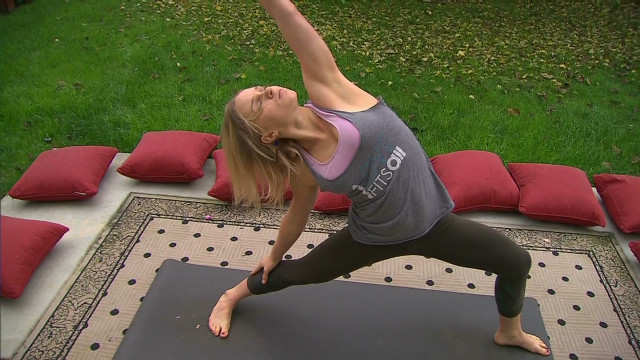
How yoga helped an anorexic recover

STORY HIGHLIGHTS
  • Chelsea Roff nearly died from severe anorexia and its complications
  • She spent 16 months in Children's Medical Center Dallas
  • She says she was lucky to get enough resources to put her life back together
  • Now, Roff wants her story to be a "beacon of hope" for others who might be suffering
Editor's note: In the Human Factor, we profile survivors who have overcome the odds. Confronting a life obstacle -- injury, illness or other hardship -- they tapped their inner strength and found resilience they didn't know they possessed. This week we introduce you to Chelsea Roff, who had a stroke at 15 brought on by her severe anorexia. At the time she arrived at Children's Medical Center Dallas, she weighed 58 pounds. Now 23, Roff is a writer, speaker and yoga instructor.
(CNN) -- The first emotion I remember is rage. It was a violent, fire-in-your-veins, so angry-you-could-kill-someone kind of rage.
I wanted out. I wanted the pain to be over. I wanted to die. I was mad at myself for not having the courage to just do it quickly, angry at the hospital staff for thwarting my masked attempt.
I was convinced that I was "meant to" endure this, that my long, drawn-out starving to death would prove my willpower to God. In the days prior to my stroke, I'd had vivid hallucinations -- of Jesus on a wooden cross outside my bedroom window and a satanic figure sneaking up under my bedroom covers to suffocate me at night. I thought I was meant to be a martyr. I thought God wanted me to die.
As the fury subsided, delirium set in. I became confused, defiant and completely irrational. I told the doctors that they couldn't possibly keep me overnight, because my family didn't have insurance or money to pay. When a cardiologist responded that she wasn't sure if I'd live another week, I told her she was full of s---.
I hid the food they were trying to make me eat in my underwear, in flowerpots, even in my cheeks like a chipmunk -- certain no one would notice. I didn't want to get better. I was convinced nothing was wrong.
I remember having nurses turn me over in the middle of the night to tend to the bed sores on my behind, places where the skin was so thin that my tailbone was starting to protrude through the flesh.
I remember waking up to discover I'd wet the bed nearly every morning for the first three months I was hospitalized. I was ashamed, disgusted. I'd lost control of the muscles in my bladder; I was like an infant all over again. I remember shooting a nurse the bird when she told me I couldn't walk, only to crumble to the floor when I angrily pushed the wheelchair away to give it a try.

Unbeknownst to me at the time, my arrival at the hospital had launched an investigation by Child Protective Services back at my home in Austin. The caseworkers deemed my mother an "unfit parent" and my sister and I were placed under custodianship of the state. My care was left to the doctors and nurses at Children's, while my sister was sent to live with our godparents. My mother, herself an alcoholic and anorexic, had literally drunk herself into oblivion (she was later diagnosed with Wernicke's Syndrome, a form of alcohol-induced dementia).
I spent the next 16 months of my life in that hospital. I completed my junior and senior years of high school through a distance education program, talked my way through hundreds of hours of individual and group therapy and slowly, painfully worked to bring my body and mind back to life.
When Medicaid finally pulled the plug on funding for my treatment, I was unrecognizable from the day I'd walked in. I'd gained nearly 40 pounds, and the feisty, fiercely independent spirit I'd been known for as a child was on her way back in (close to) full force.
Although I was still significantly underweight and terrified to leave the security of the hospital, my medical team managed to convince the caseworkers to grant me emancipation. At 17, I re-entered the "real world" as a legally recognized adult.
My doctor at Children's helped me make arrangements to move into a garage apartment with a close family friend near the hospital. I got a job at a local Starbucks, started applying for college, and, by the grace of who-knows-what, was offered almost free weekly therapy by a psychologist who'd treated me at Children's.
Three months later, I took my first yoga class. I was lucky. I was blessed. I was given enough resources to put the fragments of my broken life back together.

My hope is that my story might serve as a beacon of hope for people grappling with their own inner demons in silence and isolation. Whether it's an eating disorder, abandonment, depression or addiction, please know:
There is a way out. You don't have to suffer alone. There are people out there who want to love you, who would be honored to bear witness to your pain. Healing doesn't happen in a vacuum. We are human and we have an inherent need to see and be seen, to touch and be touched. No one heals heartbreak alone.
For the broader community, I hope this story will diminish some of the stigma and misperceptions about eating disorders. Many of us have been taught that people with eating disorders simply want to be skinny, feel like they have to look like supermodels to be worth anything, or just have an unhealthy "need for control." Those are all symptoms of an eating disorder, not the cause.
I realized that I feel like a child who was once desperately thirsty, who was given enough water to survive and shake her thirst, and now feels compelled to go out and give water to anyone who's parched. "Look! Water! I know, isn't it good?! Drink up!!" When I see people drink the water, I can't even describe the feeling -- it's as if I'm experiencing the first sip all over again. It brings me incredible joy, even healing. It's an act of alchemy. It allows me to make light of some of the darkest days of my life.
I once had a therapist who, when asked how I could ever repay her for all she'd given me, told me: "Your life will be all the thanks I need." This is how I thank her. This is how I thank all those who helped me find my way out of the darkness. Share the water.

Friday, August 31, 2012

Free2Be________.


Ramey Nutrition Presents Free2Be________.
Recovering from an eating disorderrequires an inordinate amount of rigorous self-exploration and work, but you arenot alone! 

If you feel ready to make the choiceand commitment to recover and wrestle your life from your eating disorder, wewould like to invite you to join Free2Be________.  This is a 15-week intensive program thatoffers a safe, supportive, and inviting environment for you to receive the loveand care that you need, to reclaim your life. 

Who?
Individuals ready to make the choiceto recover and are seeking more support in an outpatient "real-world"setting, and who are ready to make a 15-week commitment to theirrecovery.  Please note that an initial assessment is required priorto attending this group to assure it is the right fit for you.  Toschedule your assessment, please call: (206) 909-8022.  It would bebest to schedule your assessment at least two-weeks prior to the first group.

Program Details:
·        Mandatory part of Eating Disorder Program:
o   Eating DisorderSupport Group withShena Washburn, RD, CD on Tuesdays 5:00pm-7:00pm
o   GentleYoga withSarah Ahktar on Thursdays 6:30pm-7:30pm
·        Optional part of Eating Disorder Program:
o   Dinner, meal support Thursdays 5:00pm-6:30pm
§ Meal not provided.  Please bring your meal with you.

Location:
Ramey Nutrition
4241 Suite B 11th Ave NE
Seattle, WA 98105

Please note that in an effort toprovide support to all who attend; this program requires a 15-weekcommitment.  To assure maximum supportgiven to both you and others, we ask that you please arrive no more than 10minutes late.  We take our programs very seriously so we can providethe most reliable sense of support possible, which is why if you miss more thantwo support groups or yoga (or meal support if registered for), and/orrepeatedly arrive 10 minutes or more late to group, you will be asked to rejoinwhen you have more availability.   

**Most insurance plans will coverthis, as "group medical nutrition therapy," however you are ultimatelyresponsible for any fees your insurance does not cover**

Tuesday, August 28, 2012

Realities of Bulimia: Between Life and Death Part 4


Realities of Bulimia: Between Life and Death Part 4

Eye opening reality of what Bulimia is truly like, when it takes someone's life.
Eating disorders are a very harsh reality of our culture and here at Ramey Nutrition, it is important that we are doing everything we can to bring awareness to this life threat, prevent all development of eating disorders that we are able to access, support those in treatment, and love them into recovery, supporting their recover(ed).
http://youtu.be/OybG3m92Rt8

Category:

License:


Realities of Bulimia: Between Life and Death Part 3


Realities of Bulimia: Between Life and Death Part 3
Eye opening reality of what Bulimia is truly like, when it takes someone's life.
Eating disorders are a very harsh reality of our culture and here at Ramey Nutrition, it is important that we are doing everything we can to bring awareness to this life threat, prevent all development of eating disorders that we are able to access, support those in treatment, and love them into recovery, supporting their recover(ed).
http://youtu.be/OybG3m92Rt8

Category:

License: