Showing posts with label #Anorexia #bulimia #Orthorexia #eatingdisorder #eatingdisorderrecovery #RameyNutrition #diabulimia. Show all posts

Tuesday, February 10, 2015

WELCOME TO RAMEY NUTRITION BY SCARLETT RAMEY, MS, RD, CD


The passion that comes from working with geniuses, which most of my patients are, is immeasurable.
Witnessing the healing process they own is the primary reason I opened this clinic. My patients achieve results due to choices we make together. They are on their own time line for long and short-term goals, and I always go at their pace, not mine. Food issues I am faced with usually have a story behind them, and working through that story leads my patients to eating disorder recovery, weight management goals, diabetes management, and medical nutrition solutions. Trust is the “how” of what I do. Changing food in someone’s life can be highly detrimental, if not traumatic. Building trust is the key to allowing my patients to shift in ways that are dynamic to their goals.

One of my strengths that lead to my patients succeeding on their own is my own realization and belief that we live in the REAL WORLD. This means goals must be set that are not far off from what people normally do. When given medical goals, that seem un-doable, it can feel futile, frustrating and hopeless, but if I can align those goals with their lifestyle, I consider it a success. Often times, just
listening to my patients is the best path to success. They know more than I ever will about what the real issues are and can heal them quickly if I don’t interrupt.
If you and/or someone you love needs assistance with recovery from an eating disorder, diabetes management, weight management, or medical nutrition diagnoses, I would love to talk with you about how we can attain your goals.

‘Why don’t you just eat?’ Eating disorder patients are caught between stigma and government indifference

 |  | Last Updated: Feb 5 11:42 AM ET
More from Jennifer Sygo
While coverage of eating disorders has increasing in mass media, putting the spotlight on unhealthy images of women, especially, getting care for an eating disorder in Canada can still be difficult, and in some provinces, impossible.
Alberto PizzoliAFP/Getty Images filesWhile coverage of eating disorders has increasing in mass media, putting the spotlight on unhealthy images of women, especially, getting care for an eating disorder in Canada can still be difficult, and in some provinces, impossible.
We’ve all talked a lot about mental health in the last week or so, but when it comes down to the hard health risks, which disorder currently has the highest mortality rate?

‘Anorexia is a lifestyle, not a disease': An investigation into harrowing online forums promoting extreme dieting

“I got diagnosed with my eating disorder at the age of nine. I remember playing tag in the schoolyard with my friends and running around because I wanted to lose weight. I remember throwing out food. When celebrating my birthday, I never wanted a cake; I wanted healthy snacks and told everybody I didn’t like sweets.
“The disgust I felt towards my body developed during a period of abuse. I was sexually abused by a family member from the age of five. It lasted until I was 12 and it has made me hate my body. Starving myself is a way to make it disappear, to vanish, to clean, purify and punish myself.”
This is Jade’s story. Jade is 24 and lives in the North East of England. She studied social work at university, but is now unemployed, “because of the obvious.” Instead, Jade runs a website that has thousands of followers around the world. At the top of the home page is a red banner that reads: “Anorexia is a lifestyle, not a disease.”
The answer might surprise you: According to a number of experts, as well a study published in theAmerican Journal of Psychiatry, eating disorders might be the most deadly of all mental illnesses, with an estimated 10% to 20% of individuals diagnosed with anorexia nervosa dying prematurely as a direct result of the disorder or its complications.
Eating disorders are disturbingly common, affecting an estimated 300,000 Canadians, including a significant number of males. The number of individuals who will experience a serious eating disorder, which can include anorexia or bulimia nervosa, or binge eating disorder, is estimated to be approximately double the number with schizophrenia or bipolar disorder, combined.
Despite the prevalence and risk of eating disorders, Canada’s governments do not have a coherent strategy for prevention and treatment — or even for keeping statistics on how many of us are afflicted. There are no national databases for treatment providers, research funds are scarce, and there number of specialists who can be called upon as experts is limited. 
Perhaps what should concern us most are the wait lists for beds at in-patient eating disorder units, which can be years long. While waiting for treatment, many sufferers worsen, and in some cases, they die. Some provinces have recently increased the number of available treatment beds — Ontario, for example, has recently added a 12-bed unit in Whitby, but the numbers still barely scratch the surface — or, as is the case in Ontario, new beds are reserved for children and adolescents, not adults.
But if eating disorders are so dangerous and potentially fatal, why has there been so little action to date. “It’s discrimination, not poor planning,” says Dr. Blake Woodside, medical director for the Program for Eating Disorders at Toronto General Hospital. “It’s based on an a priori belief that these girls and guys are misbehaving, that it’s a lifestyle choice. It goes back to the old adage of, ‘Why don’t you just eat?’ These individuals experience discrimination at almost every step of their illness, and yet it’s one of our most lethal psychiatric illnesses.”The growing concern over Canada’s lack support for eating disorder patients recently culminated in a Parliamentary committee report on the subject. The report, which was released in November and is now in the hands of the federal government, included testimony from some 27 witnesses, including physicians such as Dr. Woodside, as well as dietitians, parents of affected children, and leaders of advocacy groups, such as Merryl Bear of the National Eating Disorder Information Centre, (NEDIC) and Wendy Preskow, the founder of National Initiative for Eating Disorders (NIED). The final report, which is available online, recommends improved data collection, national best practices guidelines — and shorter wait times for care.
Despite the enthusiasm generated by the release of the report, many of those who testified are concerned the committee’s recommendations are too weak and could be swept aside.
“We need a national strategy that is fully and appropriately funded, and that covers the full spectrum of issues related to eating disorders, including research, treatment, and prevention,” Bear said. 

Monday, October 13, 2014

Women’s greatest threat isn’t misogyny, it’s counting calories

The modern feminist movement is losing because of our obsession with weight.

Vanessa Garcia
September 5
Vanessa Garcia is a writer, playwright, and journalist. She is a doctoral candidate at the University of California Irvine.

I was lying in bed in my New York City apartment when the world went black. My breathing had gotten sluggish, and my heart felt like it was slowing down. I didn’t feel pressure in my chest, and I didn’t feel pain, just an overwhelming sense of tiredness and fatigue. A complete depletion of energy and the absolute inability to move. And then: black.
I hadn’t eaten anything but gum and coffee for three days. Even before that, I’d been eating very little for weeks, months, even years. I was 24 years old and a full-fledged anorexic-bulimic.
It was 2003, and I was trying to launch my career as a writer. I had dreamed of publishing my first novel by then. Instead, between the ages of 15 and 29, I suffered from numerous bouts of anorexia and bulimia. I wasted my most promising years and what little energy I had obsessing over my weight.
My problem reached the extreme, but these kinds of unhealthy relationships with food are hardly uncommon for women. At every turn we see them: a woman counting calories, a woman dieting despite her normal weight, a woman cutting carbs or pretending she’s allergic to gluten so she doesn’t have to eat that slice of pizza at the office party. I have friends who spend three hours at the gym and run marathons on a diet of bananas. This isn’t an exaggeration. According to the National Association of Anorexia Nervosa and Associated Disorders, 25 percent of college-aged women binge and purge as a form of weight-control.
College-educated women are leaning closer to the toilet bowl than to Sheryl Sandberg’s boardroom table. In the past several years, women have been speaking louder about gender discrepancies in the workplace, unfair pay and the paradoxes that arise out of trying to “have it all.” On the surface, 21st-century feminism seems to be booming. But even as writer Hanna Rosin proclaimed “The End of Men” in 2010, women were really the ones disappearing. Quite literally. According to a 2009 article in the American Journal of Psychiatry, eating disorders have the highest mortality rate of any mental disorder.
Women are starving themselves. They’re spending more time thinking about their calorie intake than how to change the world. It’s not just the severe disorders that we have to be wary of. In a 2008 survey by SELF magazine and the University of North Carolina at Chapel Hill, 75 percent of women reported disordered eating patterns, 37 percent regularly skipped meals to lose weight, and 26 percent cut out entire food groups. The report concluded that “eating habits that women think are normal — such as banishing carbohydrates, skipping meals and in some cases extreme dieting — may actually be symptoms of disordered eating.”
The drivers of this illness are all around us. Models weigh as much as 30 percent less than their recommended weight and plus-size models are often as small as a size 6. The press tells us that Victoria Beckham lost her “baby weight” with the Five Hands Diet, which means she ate five fistfuls of food a day. And there are actresses such as Elizabeth Hurley, who notoriously told Allure magazine that she’s always “thought Marilyn Monroe looked fabulous, but I’d kill myself if I was that fat.” Monroe was about 5 feet 5 inches tall and fluctuated between 118 and 140 pounds.
Even now, when songs like “All About That Bass” by Meghan Trainor hit the pop charts, I have to wonder if they are the solution or the problem. The song, touted as a healthy-sized woman’s anthem, is actually pretty demeaning considering that the only reason Trainor gives for being happy with her curves is that guys like them: “Yeah, my mama she told me don’t worry about your size/She says boys like a little more booty to hold at night.”
Women have to take their bodies back. We can’t close gender gaps when we spend endless hours counting calories instead of cracking glass ceilings. We can’t gain self-assurance when body dysmorphia is so abundant. It takes a whole lot of strength, fuel and energy to push all of inequity’s baggage off of us.
I know exactly the kind of life that weight obsession leads to. I was shaken out of my blackout by an enormous push on my back, a big jolt and something — perhaps my inner voice – whispering, “You have too much left to do.” I realized that I was alone and that I could very likely die that way. I could waste away, along with my brain, my thoughts and everything I could possibly become. I put on my coat, went outside and bought a wrap. I tried to ingest it. It was painful, both physically and emotionally, but I wanted to live. This was the beginning of my recovery. Back then, I was 5 feet 5 inches tall and 100 pounds with a winter coat, sweaters, long underwear and boots on. (I only weighed myself fully dressed in winter, so if I weighed too much, I could blame it on the extra clothes.) It took five years from that moment — two of those in weekly therapy — for me to truly gain normalcy in my eating patterns. Today, I weigh around 135 pounds.
All I can think now is: What a waste of life. I think about the missed opportunities and the unmet goals I sacrificed because of the time and energy I wasted on cutting my weight. If I could talk to my 25-year-old self, I’d tell her, “Your time is precious. Get help. Do it now. You have too many important things to do.”

Friday, September 12, 2014

The silent epidemic (dis)eased (re)presentation

If there’s one thing Duke has taught me, it's that beauty is only skin-deep. And if you really want to turn heads, you shouldn't let it get too deep.
Around Duke, we seem to have a lot of elephants in the room. And, as Duke students, we do a decent job addressing them. When it comes to body image, however, we ignore the elephant. We brush off these conversations and deny the influence it has on all of us. But there’s no denying the physical, mental and social toll body image has on members of our community.
According to a recent study by exercise physiologist Glenn Gaesser, over half of females between the ages of 18-25 would prefer to be run over by a truck than be seen as fat and two-thirds surveyed would rather be perceived as mean or stupid.
But body image concerns are not exclusive to the collegiate environment—they’ve seeped into our elementary schools, too. Slowly, the world of dieting is taking over childhood narratives.Time Magazine reports that 80 percent of all children have been on a diet by the time they have reached the fourth grade. Take that in. Rather than giving their bodies space for puberty and physical and mental development, 80 percent of 9-year olds are dieting to limit their body size. At 9 years young, dieting isn’t about portion control. It’s starvation.
1reaction

For both young girls and young women, recurrent dieting practices can lead to severe eating disorders, such as anorexia and bulimia nervosa. Despite this, the American College Health Association estimates that at least 44 percent of college women are dieting and 61 percent are exercising to lose weight. An estimated additional 10 percent of women are using laxatives, pills, or vomiting to attain their desired weight. A young woman with anorexia is 12 times more likely to die than other women her age without anorexia. So it comes as no surprise that anorexia is the third most prevalent chronic illness among adolescents, and the mortality rate for anorexia is higher than for any other psychiatric disorder.
Body image concerns are not unique to only females or young children. 27 percent of college men are dieting and 45 percent are exercising to lose weight. But losing weight is only one side one aspect to the problem. Studies show many college men suffer from muscle dysmorphia, a body image disorder that pressures males to ‘bulk up’ by gaining more muscles. Often both athletes and non-athletes who desire more muscles can be seen in the gym for several hours a week, taking in excessive lean meats and supplementing meals with protein.
These numbers should jolt us awake to the toxic environment that numerous industries are building for us. This desire to look a certain way is fed to us by many actors. The diet-related industry is a 50 billion dollar a year enterprise. Fashion models taunt us with their beautifully chiseled bodies, though they are thinner than 98 percent of American women. We look and admire, forgetting that their salary, their livelihood, depends on this unhealthy look, forgetting that this thinness is slowly destroying their organs, and forgetting the number of friends they have alienated in the quest to live this ‘thin life.’ Social media sites promote standards of beauty that are reinforced by ‘likes,’ ‘shares’ and ‘comments,’ though the backstory of the editing process never enters our timeline (but props to the several actresses who have blasted the magazine and entertainment industry for photoshopping their bodies!)
‘Healthy living’ isn’t about balancing your kale chips and carrot lunch with your afternoon workout. It’s about listening to your body—your entire body—and responding. What you eat—or don’t eat—has a direct effect on how you feel. In order for you to function at full capacity, that is, in order for you to think, read, concentrate, solve organic chemistry problems, memorize Shakespeare sonnets, research alternative energy solutions to our energy crisis and contemplate diplomatic and political strategies to human crises such as those in Ukraine and occupied Palestinian territories, you need to feed your brain the right nutrients. The brain’s energy source is glucose, which is converted from carbohydrates. Your brain also needs proteins and fats to build neurotransmitters, which are messenger chemicals that allow neurons to communicate (and as students, we need these neurons to constantly communicate). Not giving our bodies the nutrition it deserves is playing to our lowest form of living—as a mere human vessel—without allowing ourselves the confidence, energy and fuel it needs to attain our optimal potential in life.
As I reflect, I find that I often don’t ‘eat my own words.’ The Center for Disease Control may frown on the days where nothing will satisfy my hunger other than the midnight Ben and Jerry’s cone or the side of steak fries from the Loop, and that’s fine. We’re human. We can satisfy our indulgences every now and then. After all, being healthy is about being happy, too, right?
We’re also all different. We all can’t all look the same because inherently we are not. We should celebrate our differences as affirming, empowering reminders of our individuality (my extra long second toe is a daily reminder that I am, indeed, my father’s daughter).
Our bodies are created to bear blemishes, but our bodies also bear many blessings. Every day, our bodies work hard on the inside to produce the person we are on the outside. Rather than working to change our body, perhaps we should work on honoring, respecting and fueling it. Only then can we differentiate between the messages our bodies are sending us and the messages society is sending. You don’t have to take up less (or more) space to be worth more. Once we stop “fixing” our image, we are able to create bodies that inspire, empower, and excite us.
My advice: Embrace you. Own you. Love you. Rock what your mama gave you. Our culture—our younger generations—depend on all of us to change the health narrative.

Friday, August 29, 2014

Does Facebook Use Promote Eating Disorders?

facebook_button_eu3gSocial media are not just a means of sharing your life with the world – they also open your life to praise (likes and positive comments) or criticism.

Thus, it is easy to see how avid use of such platforms (especially those with ample picture posts) can potentially promote body image and weight obsessions in those who may not be quite confident and happy about their appearance.
That this may not just be an interesting theory is suggested by two studies by Annalise Mabe and colleagues from Florida State University, published in the International Journal of Eating Disorders.
In the first study 960 female college students completed an Eating Attitudes Test that included Dieting and Bulimia/Food Preoccupation subscales with items such as “I eat diet foods” and “I give too much time and thought to food.”
Duration of Facebook use was assessed with the question “How much time do you spend on Facebook per week?” with options ranging from 0 to >7 hours (average used tended to be just over 2 hours per week).
This study found a small but statistically significant positive relationship between the duration of Facebook use and disordered eating.
In the second study, 84 women, who had participated in the first study and endorsed Facebook use on a weekly basis were randomization to either spending 20 mins on their facebook account or finding information about the ocelot on Wikipedia and YouTube.
Participants with greater disordered eating scores endorsed greater importance of receiving comments on their status, and greater importance of receiving “likes” on their status. Those with greater eating pathology reported untagging photos of themselves more often and endorsed comparing their photos to their female friends’ photos more often.
Participants in the control group demonstrated a greater decline in weight/shape preoccupation than did participants who spent 20 min on Facebook. Furthermore post hoc comparisons supported a significant decrease in weight/shape preoccupation in controls.
Facebook use resulted in a preoccupation with weight and shape compared to an internet control condition despite several multivariate adjustments.
As the authors discuss, their finding,
“indicates that typical Facebook use may contribute to maintenance of weight/shape concerns and state anxiety, both of which are established eating disorder risk factors.”
In terms of practical implications of these findings, the authors suggest that,
“Facebook could be targeted as a maintenance factor in prevention programs. For example, interventions could address the implications of appearance-focused comments such as “you look so thin” or “I wish I had your abs,” in perpetuating the thin ideal on Facebook, much as “fat talk” perpetuates this ideal in everyday conversations. An adaption of the “Fat Talk Free” campaign as well as adaptations of media literacy programs could encourage girls and women in the responsible use of social media sites.”
Clearly, this appears to me as a rather fertile area for further research.
I’d certainly be interested in hearing about your experience with facebook and any effects it may have had on your body image or eating behaviours.

If you or someone you love struggles with an eating disorder, please call us at (206) 909-8022 or visit us at www.RameyNutrition.com for a full recovery!

Monday, August 25, 2014

Barrow man with eating disorder for more than 40 years tells story


A MAN who has battled an eating disorder for more than 40 years says he will never be free of it – but managing it is possible.
There are now soaring numbers of people in England who self harm and eating disorders are one type of it.
Mike Lynch, 52, from Barrow, has been an extreme binge eater since the age of five and has struggled to maintain a relationship because of it.
Mr Lynch has come forward to tackle the taboo of eating disorders in men and to share his story.
He said: “It took me a long time to realise that what I was doing is a form of self harm.
“The condition manifested itself when I was young and I didn’t understand why children the same age as me were bigger than me. I would eat all this food to try and make myself bigger and never put any weight on.
“By the time I was 15 the damage was done and I started putting weight on rapidly.”
After a few days of bingeing, Mr Lynch would then starve himself to try to lose weight.
He said: “The logic in my brain tells me that if I eat for three days straight I can starve myself for three days and it will somehow even out.”
One of the main problems caused by his eating disorder is how difficult Mr Lynch has found it to maintain a relationship. He said: “I went on holiday in the 1980s with a partner and I ruined the whole holiday because I didn’t want to go out and eat. We ended up in separate rooms and because of this the relationship broke down.”
Mr Lynch’s eating disorder remained undiagnosed until five years ago when he was referred to Safa in Barrow.
Safa deals with individuals who self harm and offers them counselling and trusting support.
Mr Lynch said: “Safa has really helped me, especially with the counselling.
“I have been very, very lucky that I have not done more damage to myself over the years.”
Eating disorders are more commonly associated with women and men tend to be the silent sufferers. Mr Lynch hopes to change this.
He said: “There is just as many men as women who suffer with eating disorders but, because of societal attitudes, not as many are willing to come forward and talk about it.”
Mr Lynch has been working closely with Safa in managing his condition, but is aware how easily a relapse can occur.
He said: “About a year ago I didn’t eat for three days. During this time I decided to walk from Lancaster to Kendal because I was convinced it was good for me and my body just gave up.”
Nicky Guest, 46, from Barrow, is a support worker and counsellor at Safa.
She works closely with Mr Lynch and feels he is making great progress.
She said: “There is a massive taboo when it comes to men admitting that they have an eating disorder and there is a huge difference now from when Mike first walked through our doors.”
Mr Lynch’s weight has fluctuated massively during his daily battle and in the past five years alone he has gone from one extreme to another.
He said: “At my heaviest I have been 17 and a half stone and my lowest has been nine stone.
“People need to know that there isn’t a magic pill to cure it. I will have this eating disorder until the day I die, it’s managing it that’s the key.”

Thursday, August 21, 2014

How a Vegan Blogger’s Healthy Lifestyle Escalated Into an Eating Disorder

Eating Disorders related image
A little over a year ago, Jordan Younger began her blog “The Blonde Vegan”- now “The Balanced Blonde”- to chronicle her vegan journey. Younger had suffered from stomach problems her whole life and for the first time she felt good about the healthy diet she was following.
Younger’s blog gained a large following and she left grad school to pursue growing The Blonde Vegan’s brand. As her brand expanded, Younger’s vegan and healthy lifestyle habits shifted into more obsessive eating behaviors and an eating disorder called Orthorexia.
“I wanted to feel as healthy as I could so I got really carried away with reading about veganism, doing research and following other blogs,” Younger said. “I developed fears around food and was constantly trying to find different ways to be as clean internally as I possibly could.”
Orthorexia is an eating disorder characterized by the fear of eating anything that is not completely pure or clean. It can start out as an attempt to eat healthier, but escalates into an obsession with eating only healthy foods, according to the National Eating Disorders Association (NEDA).
“I was obsessed with health, not being super skinny,” Younger said.
While suffering from Orthorexia, Younger tried to mask her healthy obsessions, she said. She went out to eat with friends, but would eat beforehand to make sure she got in a healthy meal. When going out, Younger checked that there was an organic grocery store around and panicked about when and what her next meal would be.
With eating disorders, many people assume it’s something written on your body that you can notice, Younger said. But with Orthorexia, Younger was suffering more psychologically.
Jordan Young
“I was almost thinking about food 100 percent of the time,” Younger said. “It was confusing because you’re trying to think about other things, but in the back of your mind, you’re always thinking about food.”
According to Younger, it was a very scary and dark time in her life.
Her own life was unhealthy while she was trying to lead people toward healthier lifestyles. Younger realized it was time to get help so she brought the eating disorder up to her family and they were relieved she wanted help. Younger saw a therapist who specializes in eating disorders and started treating her Orthorexia.

“The scariest fact was that I was a vegan food blogger and had branded myself as that. I had so much anxiety that I would have to change the brand and it would come crashing down,” Younger said.
On June 23, 2014, about a year after Younger started The Blonde Vegan, she wrote a blog post sharing that she was transitioning away from veganism with her readers. When Younger came out about Orthorexia on The Blonde Vegan, there was immediate interest, as the eating disorder is not very well known. Her followers gave mixed responses too. While some were very supportive, others from the vegan community were outraged Younger would associate veganism with eating disorders.
“I never expected this to be a popular story. There is no reason I would come out with this for personal fame,” Younger said. “I just wanted to be honest with my followers.”
Since moving away from a strict vegan diet, Younger has transitioned to a more balanced lifestyle. She has started eating a wider variety of foods like eggs, wild fish and salmon, and enjoys trying new meals. Younger is also improving her lifestyle spiritually and physically. Rather than working on her blog constantly, she makes time to connect with herself through exercise, going on walks, spending time outdoors, enjoying her neighborhood and yoga.
Jordan Young
“Listening to your body is the best thing you can do for yourself,” Younger said. “I’m trying to not be so all or nothing in my life and am finding balance in all aspects.”
Younger shares her story today to help raise greater awareness around Orthorexia.
She is working on a book chronicling her vegan journey that lead to the eating disorder, is working on mini documentaries and is in contact with blog readers who think they are also Orthrexic. Her blog, once known as “The Blonde Vegan” is currently under redesign as it transitions to “The Balanced Blonde.”

“I think developing a stronger mind-body connection will enhance my life from here on out,” Younger said. “For the first time in my life, I’m truly showing my body kindness.”
 
If you or someone you love suffers with an eating disorder, please visit us at www.RameyNutrition.com or call us to set up your Gentle Eating Disorder Assessment
 
(206) 909-8022.


Thursday, August 14, 2014

Coming Out About Eating Disorders Might Not Be Cathartic, But It’s Important

Girls’ actress Zosia Mamet became the latest celebrity to share her struggle with an eating disorder this week.
“I’ve struggled with an eating disorder since I was a child,” she wrote in a column for Glamour magazine. “This struggle has been mostly a private one, a war nobody knew was raging inside me. I tried to fight it alone for a long time. And I nearly died.”
The list of celebrities who have admitted to eating disorders—Victoria Beckham, John Prescott, Lily Allen, Mary-Kate Olsen, Kate Winslet and Lindsay Lohan—is growing. It’s all-too-easy to dismiss them, to roll our eyes and think oh please, just get on with your model-acting-whatever career. But here’s the thing: when these women speak out they’re not just getting the urgent issue of eating disorders into public discourse —which can only be a good thing—they’re also admitting that being super-slim doesn’t come naturally.
There is a risk, of course, that beautiful, successful celebrities could inadvertently glamorize eating disorders to vulnerable fans. It’s the same risk any role model takes when they discuss their demons, be it drink or drug addiction or any kind of mental illness. A few years ago, both Kerry Katona and Catherine Zeta-Jones were accused of jumping on the bipolar bandwagon. As if such a debilitating condition were a carousel one could hop on and off at their whim.
I believe these celebrity revelations have a huge impact on younger women (and men) who are struggling with food and eating, body dysmorphia or low self-esteem. I remember, aged 19, feeling very alone with the terrible secret of anorexia. I was at university, had just been through my first serious relationship break-up and simply stopped eating. What started as straightforward heartbreak spiraled out of control. My weight plummeted from a healthy nine-and-a-half stone to five-and-a- half.
I knew something was badly wrong, but I didn’t know who to talk to. Or how.
In the depths of this nightmare, I read a magazine interview with Mel C talking about her eating disorder. I’m no die-hard Spice Girls fan (honest) but, finally, here was someone “normal” who had been through what I was going through. In that moment, I felt less isolated.
When Zosia Mamet writes “I nearly died”, she’s not being a drama queen. Eating disorders kill. They have the highest mortality rate of all mental illness—20 percent of those with anorexia nervosa will die, either from suicide or physical complications. In recent years we’ve seen several tragic deaths—Amy Winehouse, Brittany Murphy and Peached Geldof—where eating disorders are suspected to have played a part.
Starvation, vomiting and death are not glamorous. At all. Bulimia nervosa is often the most shameful and hidden of eating disorders and is very dangerous. Repeated purging after meals puts immense strain on the organs and can lead to cardiac arrest, while prolonged use of laxatives causes chronic constipation and other internal damage.
In the warped hierarchy of eating disorders, anorexia is seen as disciplined and superior. Bulimia is disgusting and dirty. Hence the flourishing of those horrible “thinspiration” websites, preferring to depict the ethereal hip-bones and shoulder-blades of waif-like anorexics.
The reality of bulimia is the stench of vomit and rotting teeth.
This is why someone like Nicole Scherzinger deserves respect. Last month, she spoke to Cosmopolitan about her long struggle with bulimia. For a woman whose career is dependent on image, sass and a constant projection of a glamorous, enviable lifestyle, it can’t have been easy to discuss this far-from-sophisticated illness.
Of course, there are risks that come with publicizing eating disorders. I worked on the show Supersize vs Super Skinny and received an alarming tweet once. “I am anorexic and I want to be just like Emma Woolf. She’s skinny, pretty, successful and on TV. Just proves that skinny is good,” she said.
I was appalled. Everything I’ve ever tried to do, in sharing my ten-year fight with anorexia, is to show other sufferers that it’s a terrible waste of life; that recovery is possible. That life after anorexia, or any eating disorder, can, truly, be amazing. But you can see how it gets twisted.
Is “coming out” cathartic? Not in my experience. In writing about anorexia I’ve paid a high cost in terms of personal relationships and my own privacy. Recalling the worst decade of my life isn’t therapeutic. It’s painful. But this isn’t about me. When I write or speak about eating disorders, I’m amazed at the number of “normal” people, female and male, who say, “I feel this way too.” Most of these people do not have an actual eating disorder—they simply recognize that they have disordered eating patterns, feel guilty about their hunger, unhappy with their body weight or shape, or generally out of control around food.
Disordered eating comes in all shapes and sizes. It’s not just the severe, much-publicized image of binging, purging and starving. Many of us calorie restrict or obsess over the “goodness” in our diet to the point of orthorexia. You don’t need to be skinny to have a disordered relationship with food. I know women who use food as a reward or punishment—a “good” day is one where we eat salad and go to the gym, a “bad” day is one where we don’t move much and eat a lot of chocolate or chips. We calculate in advance what we will and will not eat, ricocheting between self-loathing and self-control. As one woman asked me once, “If I eat when I’m hungry, will I ever be able to stop?”
Eating disorders are a profound struggle between body and soul. They are mental illnesses. From the outside, though, the struggle often makes zero sense. Why would a starving, skeletal person say they look fat? Why can’t they just eat? To external observers—even the psychologists and medical professionals who provide treatment—the illness is very hard to understand. The mental barriers, patterns and neurosis of eating disorders aren’t tangible to anyone but the sufferer, which is why they are secretive, feeding on shame and fear.
This is why the honesty has to come from sufferers. It took me years to admit to myself that I had a problem, let alone say the word “anorexia” out loud. I don’t care whether you’re high-profile or no-profile—coming out is brave, and the first step on the road to recovery.


Friday, July 11, 2014

A Day In The Life Of A Student With A Severe Eating Disorder

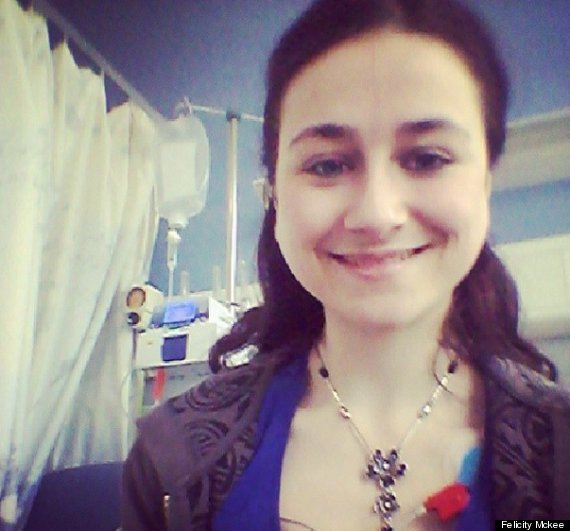
Felicity Mckee is a 23-year-old undergraduate at Ulster University. On paper, she sounds like any other normal student - except she suffers from a severe eating disorder which sees her regularly hospitalised.
"The disorder is basically my everyday life," she tells The Huffington Post UK. "Every aspect of my life is touched by it.
"It my life were a pie chart, it would take up most of it and the other areas would be tinged by it."

The condition has resulted in Felicity suffering from brittle bones, depression and a life-threatening electrolyte instability which means she is admitted to hospital on regular occasions.
felicity mckee
Felicity during a hospital visit

It also controls where she lives - stairs are hard as the electrolyte problems cause light headedness and muscle weakness - and whom she lives with - Felicity has to make sure she is around friends who are capable of medically assisting her.
"Hospital admissions interfere with me attending university, exams and coursework," she continues. "And my disability meant I was declared unfit to work. Any job I did have wasn't always happy to accommodate taking medications or time for medical appointments."
Felicity is currently on medical leave from university for the second time, and says a big issue is people assume eating disorders are primarily about weight - when they are actually a mental health problem.
"There was definitely a level of denial as when I initially reached out for help, people would say 'don't be silly, people with eating disorders are skeletal', which is a total falsehood. Even when I was at my worst, I'd tell doctors I wasn't ill as I wasn't really skinny.
"If you aren't thin you aren't seen as ill. But my electrolytes were all over the place and on some occasions and I was at risk of heart attack or cardiac arrest. I was warned even breaking into a sweat could kill me."
Felicity used to be a regular gym goer at university and says even when her BMI was too low, she was complimented on her illness and physique.
"This only feeds the problem," she explains. "The gym certainly didn’t help, and people complimenting me wasn’t useful either. Once it became the unspoken secret around the student village, and people then used it as a reason to ask diet advice from me, as I was clearly so successful according to them.
"People still think it is a choice. One lecturer told me I chose to be in hospital."
One Priory Clinic doctor previously warned university was a breeding ground for eating disorders due to the amount of freedom and lack of a support network, which Felicity says was the case.
"I could stay away from home, and those close only saw me rarely, so it is easier to hide. People tend to label their food at uni, and I was no different, except mine was in individual portions labelled with calorie content. People assume you are just health conscious, and leave it at that.
"I think there is a general indifference, or a you brought this on yourself attitude among students.
"The issue was that when I needed help once to go to hospital, most people felt I was always in and out of hospital. Once I was left slumped in the middle of a university corridor ringing around for a lift from anyone. I managed to get a friend to go with me, even though she had to leave class and we managed a taxi to Belfast,
"On what should have been my 21st birthday, I was hardly able to walk."
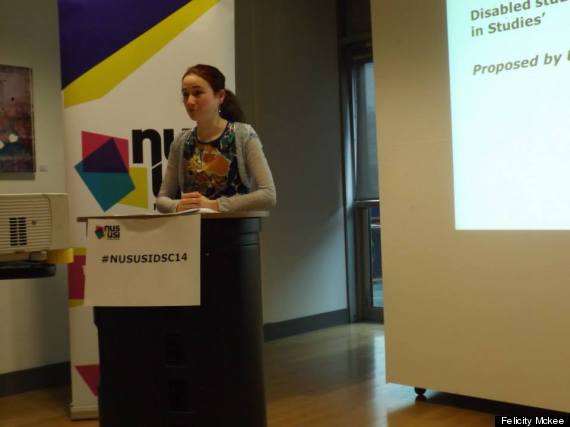
felicity
Felicity talking at an NUS event

Despite previously keeping her condition a secret, Felicity says she has opened up about her eating disorder in the hope she can escape it.
"Such secrecy only perpetuates the stigma and tightens its grip as you feel unable to speak about it. Sometimes it can be ‘visible’ but it isn’t always. By staying silent and others engaging in silence as well, it allowed me to get away with it for so long.
"Support wasn’t there for me, and so it was easier to be in the grips of this, people knew, but no-one said, it was the unspoken secret.
"Having an eating disorder is a terribly lonely place."
Although Felicity says she is very much still in the grips of the condition, she feels stable, and she is receiving medical support.
"Recovery is like a cha cha, 2 steps forward, one step back."
"But," she adds, "you are still going forward."

Friday, July 4, 2014

Kim MacKenzie, Miss Norway 2014, has teamed up with Joi Hall of Empowered by Joi and the Youth Eating Disorder Awareness, to appear at the Dying to Be Thin Red Carpet Gala in Beverly Hills on June 27

Kim MacKenzie, Miss Norway 2014 in the Queen of the Universe Pageant to speak at the Dying to Be Thin Red Carpet Gala with Joi Hall of Empowered by Joi
Kim MacKenzie, Miss Norway 2014 to speak at the Dying to Be Thin Red Carpet Gala
Kids battling eating disorders have to know that they have support. They have to feel comfortable talking about it. We hope to give them that.
Los Angeles, CA (PRWEB) June 03, 2014
According to a National Institute of Mental Health (NIMH) funded study in 2011, 3% of U.S. adolescents are affected by an eating disorder, but most do not receive treatment for their condition. Kim MacKenzie, Miss Norway 2014, who will be appearing at the Dying to Be Thin Red Carpet Gala on June 27, 2014, was a part of this percentage.
“The only help I received was from friends and family. But, if I hadn’t told them that I was battling an eating disorder, no one would have known. No one would have been able to help me,” states MacKenzie, “That’s why this gala is so important to me, because kids battling eating disorders have to know that they have support. They have to feel comfortable talking about it. We hope to give them that.”
MacKenzie is teaming up with Joi Hall, a holistic, self-empowerment youth activist, motivational speaker, wellness and lifestyle coach, radio host of “Talking with Truth,” and creator of Empowered by Joi. Together, MacKenzie and Hall will be using the Dying to Be Thin Red Carpet Gala to raise funds for Psycotherapy Plus, a 501(c)(3) non-profit, local agency that has served the Inland Empire and San Bernadino and surrounding areas since 2006. Their goal: to bring awareness about the escalation and severity of youth eating disorders amongst our children as young as second and third grade, erase the stigmas surrounding youth eating disorders such as age, gender, and ethnicity, and, show that through collaboration, there is a solution to this mental illness.
“Most people don’t categorize an eating disorder as a mental illness,” explains MacKenzie, “But it is.” In fact, according to the NIMH, a majority of youth with eating disorders also meet criteria for at least one other psychiatric disorder such as depression; and, youth with eating disorders associate with higher levels of suicidal thinking, compared to those without an eating disorder.
Dying to Be Thin Red Carpet Gala will take place on June 27, 2014 at 7:30PM at Sfixio in Beverly Hills. General admission tickets are $35. VIP tickets are $50. Tickets can be purchased on Eventbrite or on http://dyingtobethinredcarpetgala.splashthat.com/.
About Kim MacKenzie, Miss Norway 2014:
Kim MacKenzie is a Burbank-born screenwriter, producer, actress, and multi-passionate entrepreneur. Named "Pilates Pro" by Oxygen Magazine, as president and spokeswoman for The Body Archer, Kim helps millions of Americans relieve back pain with her company’s doctor-recommended back stretching chair, The Body Archer®. Nominated for three WEGO Health Activist Awards, her writing on healthy living has been featured in Spafinder Wellness 365, Classtivity, Become Natural, Hearts of Gold, and The Care Co. Kim has also permeated the entertainment industry as a screenwriter, actress, and producer. Her film BRO’ starring Danny Trejo was distributed by Lionsgate in December 2012. As Miss Norway 2014 in the Queen of the Universe Pageant, Kim is sponsored by Rock’s Tree and Hillside Service, The Body Archer, and “Confessions of a Woman” series author, Isabell Wells. Kim’s mission is to combine health and entertainment, inspiring people to live healthy, well-balanced, abundant lives.
About Joi Hall, Empowered by Joi:
Joi Hall is the founder of "Empowered By Joi". She is a self empowerment youth activist, motivational speaker, and soon to be author who has appeared on The Fox Morning Show, The Sheryl Lee Ralph Radio Show, and and has spoken at church organizations, youth events, and various organizations about natural health and family life, mindset reformation for success, and entrepreneurship. She uses insights from her background as a young entrepreneur, success coach, and chronic disease warrior to create personal and captivating presentations that inspire results. As a young mother of 3 children, she is dedicated to creating a movement of empowering and transforming the lives of our youth, and communities from a holistic perspective through self development, health and wellness initiatives, community involvement, and leadership. She is a true asset to youth organizations that want to increase productivity, morale and the health of their youth. http://www.empoweredbyjoi.com.

If you or someone you love has an eating disorder, or struggles with body image, please call us at Ramey Nutrition (206) 909-8022 or visit us at www.rameynutrition.com

Friday, June 27, 2014

Plus Sized Images Can Change Body Size Preferences

     Eating disorder professionals and advocates have long discussed the effect of the 'thin-ideal' on body-image and self-esteem.  Westerners see an average of 2,000 images in advertising alone, on a daily basis, and images of thin bodies far outweigh the number of normal and plus-size bodies seen in the media.  There have been multiple studies on how this may play into the creation of eating disorders and how it affects the self-image of people who don't have eating disorders.
Interestingly, there is new research that society's preference for small bodies could be changed by viewing more images of plus-size models. 
     A study done recently at Durham University in the United Kingdom, showed women images of both slim bodies and plus-sized bodies. When shown the photographs of the plus-sized models in 'aspirational' settings (such as a beauty product or fashion advertisement), the preferences of the women being surveyed changed.
     Although it is unknown if viewing larger people would change preferences long-term, it is an important finding and one that encourages fashion designers and magazines to continue to increase the number of plus and normal sized women who are featured on their pages and in their shows.
What do you think of this study's results?  Do you think that viewing more normal and/or plus-sized women would change your preferences?

If you or someone you love has body image issues, please call Ramey Nutrition at (206) 909-8022, or visit us at www.rameynutrition.com

Friday, June 20, 2014

A new breed of eating disorder that couples starvation diets with excessive alcohol consumption is sweeping through college campuses, affecting scores of young women, experts say. To avoid gaining weight, the coeds devote their calories to the booze.

This condition is blurring the line between eating disorder and substance abuse, making it particularly dangerous, and many young women find themselves developing these habits once they head off to college.
ALCOHOLIG2
Jamie Selfrige, an occupation therapy student at the University of Illinois at Chicago, found herself and her friends falling into a pattern of skipping meals followed by heavy drinking while she was an undergraduate student.

“We wouldn’t eat dinner,” Selfrige said, now a graduate student for whom the problem faded away by senior year. “We would save up all of our calories for drinking.”

Part of the problem is how heavily girls influence their other friends. What starts out as a problem for just a couple of girls can quickly spread to an entire peer group.

“If they’re gonna skip a meal, then I’m gonna skip a meal because I don’t want to be the fatty," Selfrige said.

Niquie Dworkin, coordinator of clinical training at Lakeview Center for Psychotherapy, has worked for more than 20 years with people who suffer from eating disorders as well as those who struggle with substance abuse.

“I think most people probably fall into a category of disordered eating,” Dworkin said. “They might not have an eating disorder proper, but they might exhibit some of the symptoms.”

These negative feelings towards foods and the knowledge that alcohol contains a lot of calories makes the problem even worse for women trying to limit their calorie intake.

Allison Chaplin, a nursing student at DePaul University, began to notice one of her friends developing this habit while in college and it seems to be getting worse.

“She literally will not eat during the day and then she’ll drink,” Chaplin said.

The pressure to be skinny is evident in every magazine, movie and television show and girls are well aware of that pressure early on.

“Thin is what’s beautiful,” Selfrige said.

As girls get older and head off to school, the need to stay thin is complicated by the pressure to fit in as a college student by partying and drinking.

“It’s just part of the college lifestyle,” Selfrige said.

Chaplin chocks it up to “a fear of missing out.”

While most young people see college as a gateway to independence, it also creates an environment that contributes to eating disorders and substance abuse since starting college is such a huge lifestyle change.

College is “the first time that most of these people have been away from their parents, so whatever sort of ways their parents were helping them stay on track or be moderate, they don’t have that anymore,” Dworkin said.

Additionally, their age puts them at a particularly high risk to develop problems with alcohol and eating, though eating disorders can occur with or without substance abuse.

“Young people, when they’re 18, 19, 20, you know, their brains are still developing,” Dworkin explained. “They don’t have as much capacity to weigh it and think things through, so they’re more vulnerable.”

There may be another, newer explanation, though, and it comes from something most young people use every day. Pamela Keel, professor of psychology at Florida State University, conducted a study that identified a link between Facebook use and the risk of developing an eating disorder.

Keel has spent her career teaching and researching factors that contribute to eating disorders and negative body image. Two of her students approached her about doing a study when they realized that the popular social media sight might be influencing young women’s attitudes about their bodies.

“More time on Facebook is associated with disordered eating,” Keel said. Facebook reinforced a poor self-image as young women looked at and compared themselves to the glamorous shots of others.

The study had two parts. The first part was a survey where women reported the how frequently they used Facebook and their attitudes towards eating, looking for some sort of link. The second part questioned whether Facebook use caused these attitudes or just correlated with them. Keel set up an experiment where women were called in to spend either 20 minutes on Facebook or 20 minutes reading a Wikipedia article. The women who spent time of Facebook found it contributed to increased anxiety over weight and body image compared to those who read the Wikipedia article.

Keel explained that Facebook is unique compared to other websites because it brings together peer pressure and media in the same place.

Facebook “basically combines these two known risk factors,” Keel said. The study was published in the International Journal of Eating Disorders.

Restricting calories wreaks havoc on the body, but just how harmful is it and what is affected?

Severely restricted diets and alcohol abuse impair the brain in similar ways, according to Dr. David Hamilton, a psychiatrist specializing in neuroscience and the associate medical director of Yellowbrick, an addiction treatment facility in Evanston. His training in neurology give him an understanding of how different substances impact brain function.

He explains that starvation impairs certain parts of the brain.

“The brain has developed mechanisms for dealing with that and it starts selectively shutting down parts that aren’t as necessary as other parts,” Hamilton said. “And those parts are things like reason, decision-making, consciousness.”

The way alcohol interacts with the brain is strikingly similar, gradually impairing function. Combining food restriction with drinking is even worse because it magnifies the effects on the brain, which can be dangerous and even deadly for young women.

“They’re more vulnerable to traumatic assault, accidents, drinking more than they intended to, using other substances they might not have decided to if this issue, this decision making part of the brain, was working more properly,” Hamilton said.

Unfortunately, what starts out as a minor problem for some women turns into a huge one later down the road. This is what Chaplin sees happening to her friend.

“It’s kind of taking over her life now,” she said.

While some young women spiral out of control, others find they are able to correct the problem as they grow older and leave the college lifestyle behind.

“It slowly started to taper off senior year,” Selfrige says.

Selfrige has not had any problems since she graduated from college, suggesting that the condition may be a phase that other college women will be able to outgrow.
 
If you or a loved one struggles with an eating disorder or disordered eating, please call Ramey Nutrition at (206) 909-8022 or visit us at www.rameynutrition.com